Paganini's Caprice — "Transformation" Series (2003)
Year
2003
Dimensions
70 × 90 см
Materials
acrylic on canvas
Medium
Painting
Series
TRANSFORMATION
Price
$4000
Shipping cost depends on location
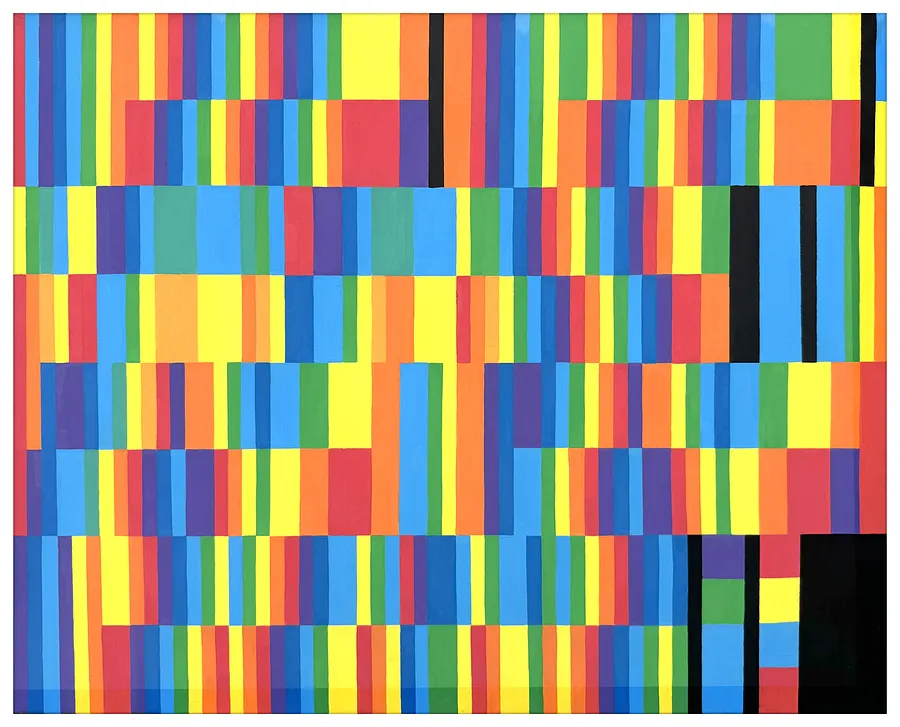
90 × 70 cm
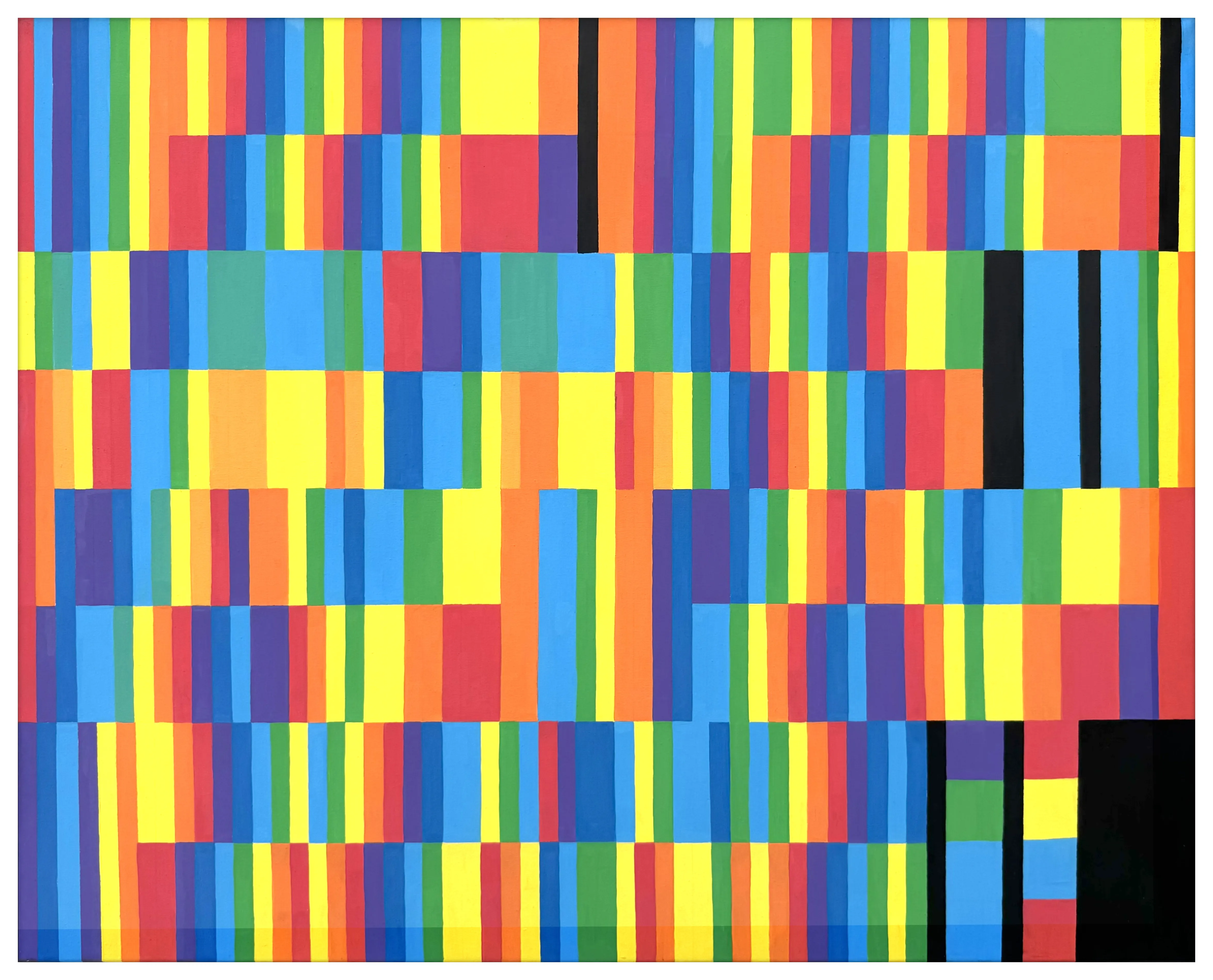
Paganini Caprice belongs to the early Transformation cycle, in which I explored the possibility of translating musical sound into the language of colour, rhythm, and form. Music is not illustrated here; instead, it becomes the initial impulse for constructing an autonomous painterly structure.
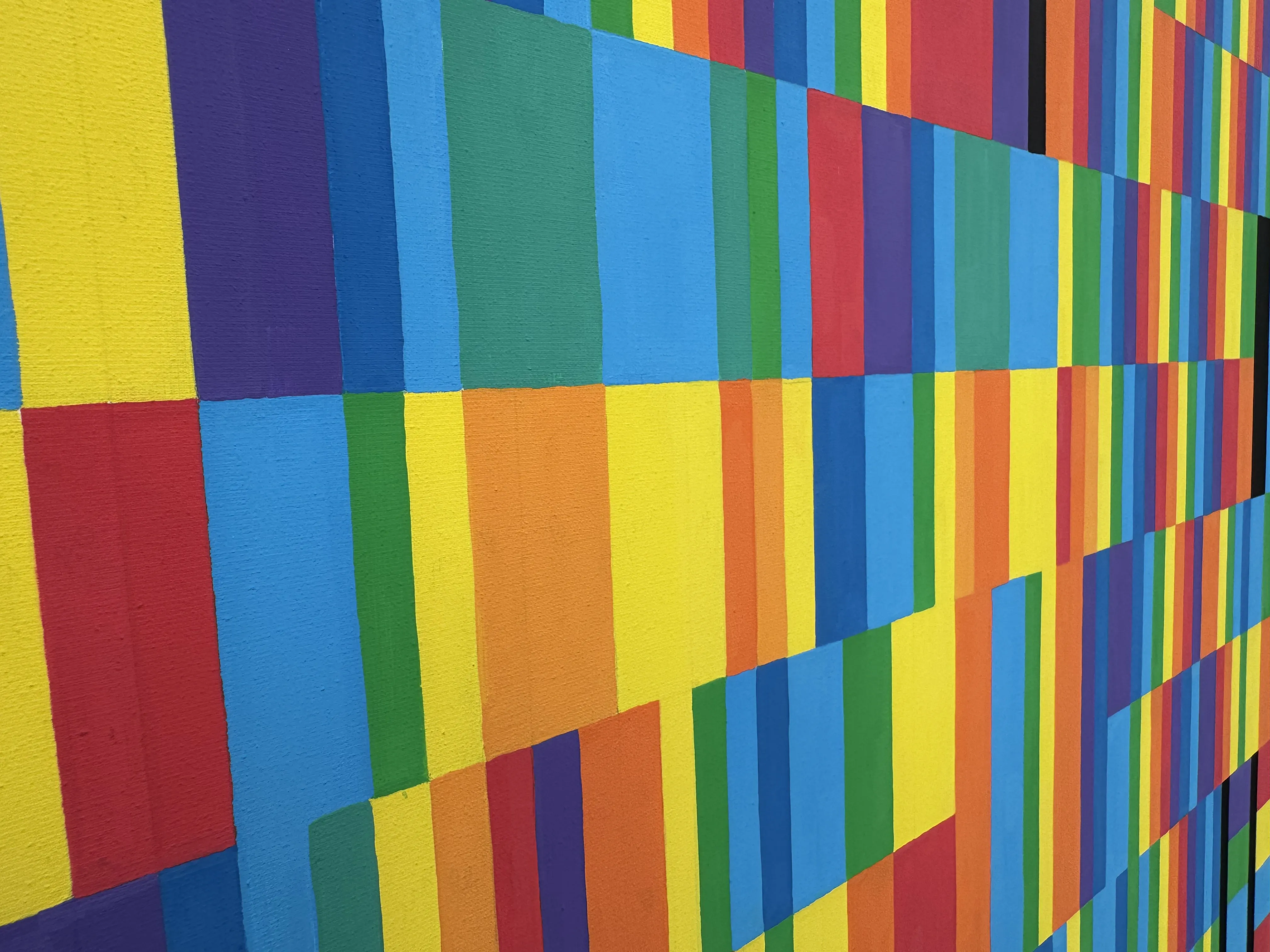
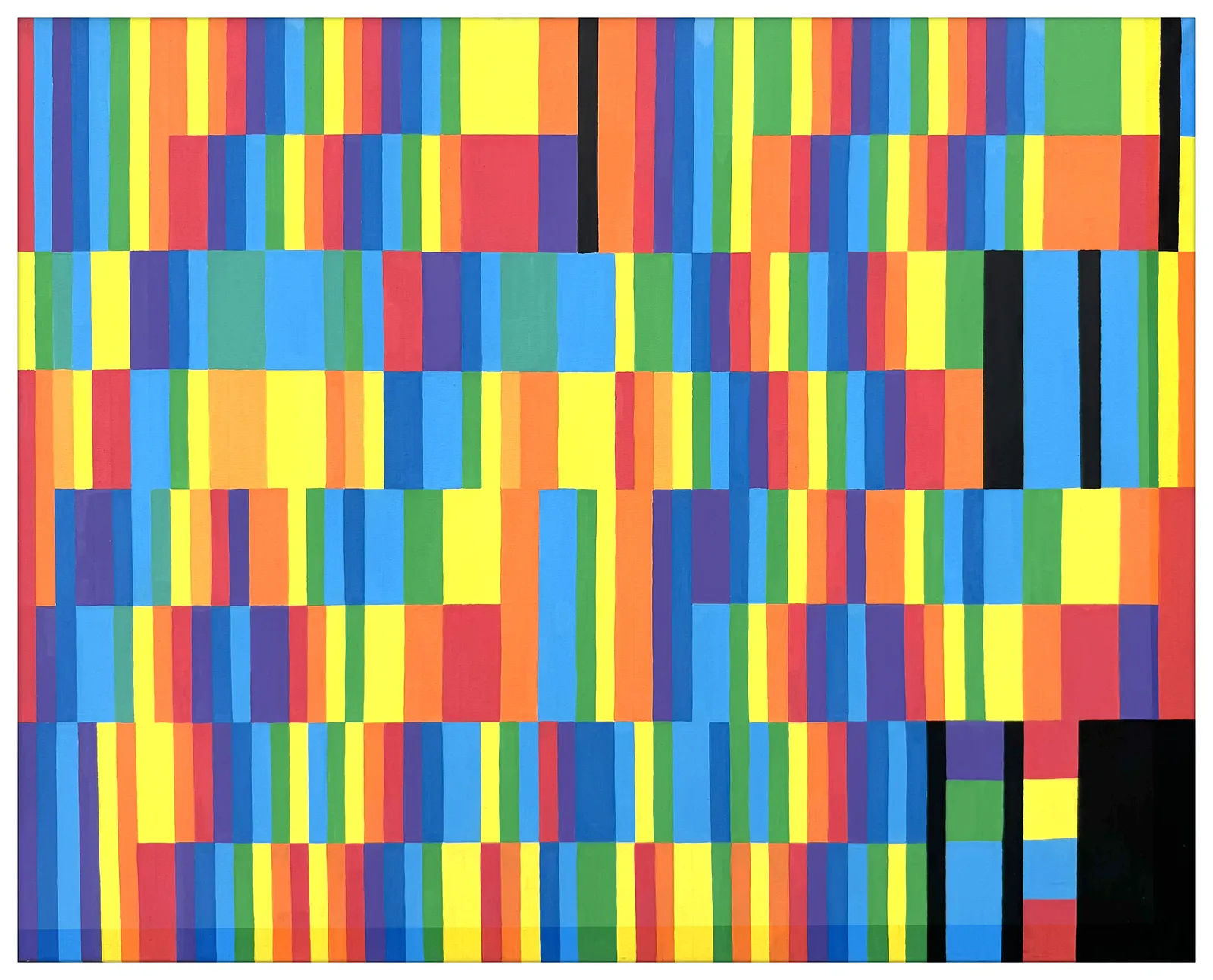
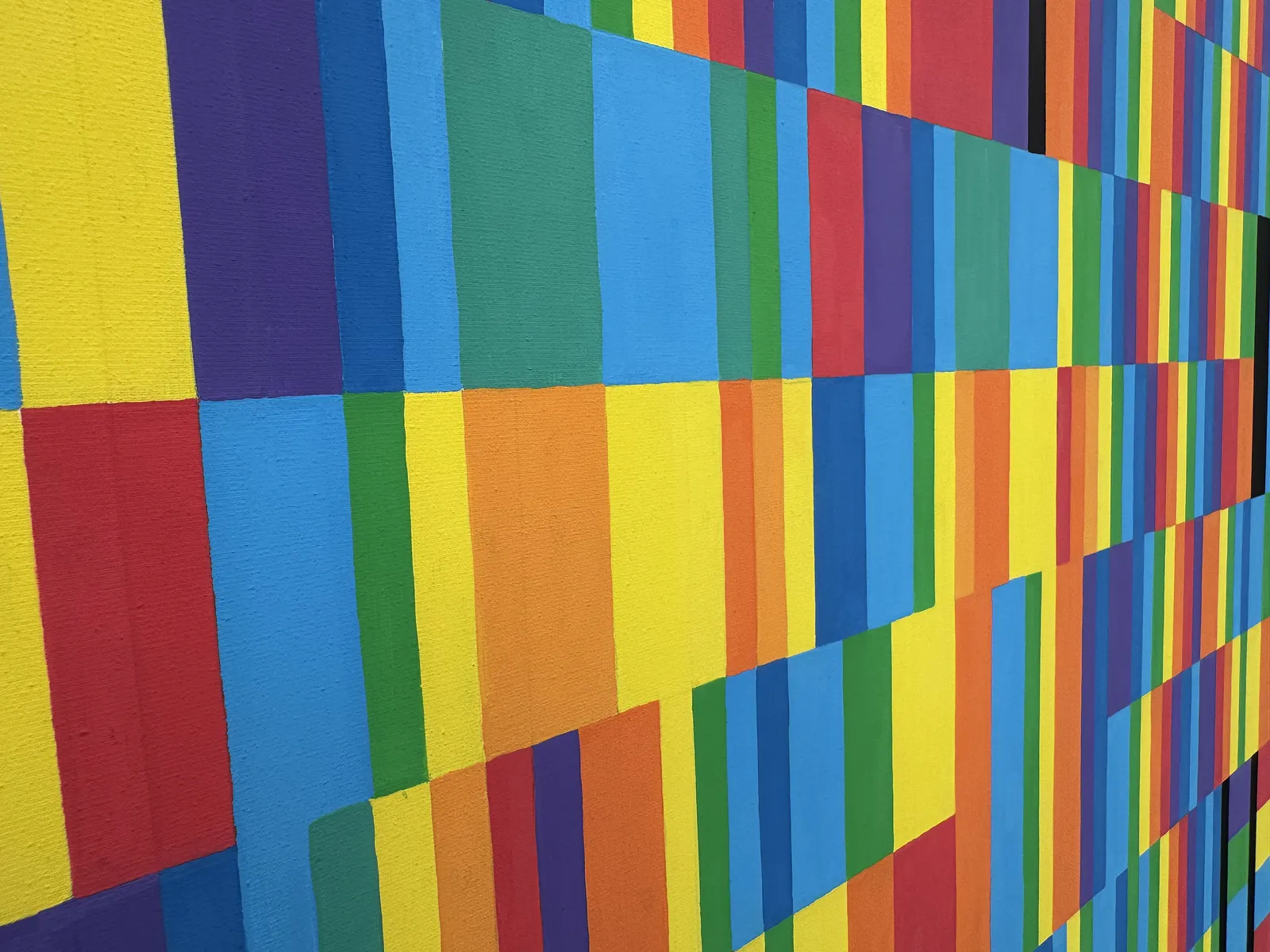
The composition consists of vertical colour modules of varying widths, organized into horizontal rhythmic sequences. Their alternation can be perceived much like a musical phrase: individual colours appear, recur, change in duration, enter into contrast, or are suddenly interrupted.
It is precisely the variation in the width of the coloured bands that creates a sense of changing tempo and duration. Larger planes seem to slow the movement, while narrow verticals intensify it, becoming rapid chromatic impulses. Black fragments function as pauses or moments of abrupt rupture, altering the rhythm of the entire composition.
The title refers to the virtuosity of Niccolò Paganini’s music — its rapid transitions, contrasts, repetitions, and complex internal rhythms. Yet the painting does not attempt to represent any specific musical composition. Sound becomes a point of departure in the search for its visual equivalent — the moment when musical rhythm is transformed into the rhythm of colour.
In this sense, Paganini Caprice can be understood as one of my early attempts to develop a system in which colour acquires duration, form acquires rhythm, and the pictorial plane begins to function as a kind of score.
Buy Paganini's Caprice — "Transformation" Series (2003)
Year
2003
Dimensions
70 × 90 см
Materials
acrylic on canvas
Medium
Painting
Series
TRANSFORMATION
Price
$4000
Shipping cost depends on location
Paganini Caprice belongs to the early Transformation cycle, in which I explored the possibility of translating musical sound into the language of colour, rhythm, and form. Music is not illustrated here; instead, it becomes the initial impulse for constructing an autonomous painterly structure.
The composition consists of vertical colour modules of varying widths, organized into horizontal rhythmic sequences. Their alternation can be perceived much like a musical phrase: individual colours appear, recur, change in duration, enter into contrast, or are suddenly interrupted.
It is precisely the variation in the width of the coloured bands that creates a sense of changing tempo and duration. Larger planes seem to slow the movement, while narrow verticals intensify it, becoming rapid chromatic impulses. Black fragments function as pauses or moments of abrupt rupture, altering the rhythm of the entire composition.
The title refers to the virtuosity of Niccolò Paganini’s music — its rapid transitions, contrasts, repetitions, and complex internal rhythms. Yet the painting does not attempt to represent any specific musical composition. Sound becomes a point of departure in the search for its visual equivalent — the moment when musical rhythm is transformed into the rhythm of colour.
In this sense, Paganini Caprice can be understood as one of my early attempts to develop a system in which colour acquires duration, form acquires rhythm, and the pictorial plane begins to function as a kind of score.
Ask Paganini's Caprice — "Transformation" Series (2003)
Year
2003
Dimensions
70 × 90 см
Materials
acrylic on canvas
Medium
Painting
Series
TRANSFORMATION
Price
$4000
Shipping cost depends on location
Paganini Caprice belongs to the early Transformation cycle, in which I explored the possibility of translating musical sound into the language of colour, rhythm, and form. Music is not illustrated here; instead, it becomes the initial impulse for constructing an autonomous painterly structure.
The composition consists of vertical colour modules of varying widths, organized into horizontal rhythmic sequences. Their alternation can be perceived much like a musical phrase: individual colours appear, recur, change in duration, enter into contrast, or are suddenly interrupted.
It is precisely the variation in the width of the coloured bands that creates a sense of changing tempo and duration. Larger planes seem to slow the movement, while narrow verticals intensify it, becoming rapid chromatic impulses. Black fragments function as pauses or moments of abrupt rupture, altering the rhythm of the entire composition.
The title refers to the virtuosity of Niccolò Paganini’s music — its rapid transitions, contrasts, repetitions, and complex internal rhythms. Yet the painting does not attempt to represent any specific musical composition. Sound becomes a point of departure in the search for its visual equivalent — the moment when musical rhythm is transformed into the rhythm of colour.
In this sense, Paganini Caprice can be understood as one of my early attempts to develop a system in which colour acquires duration, form acquires rhythm, and the pictorial plane begins to function as a kind of score.